Do you want to switch the language?

Press information
CANCOM Austria

CANCOM Group Info: Newsroom

16. June 2026

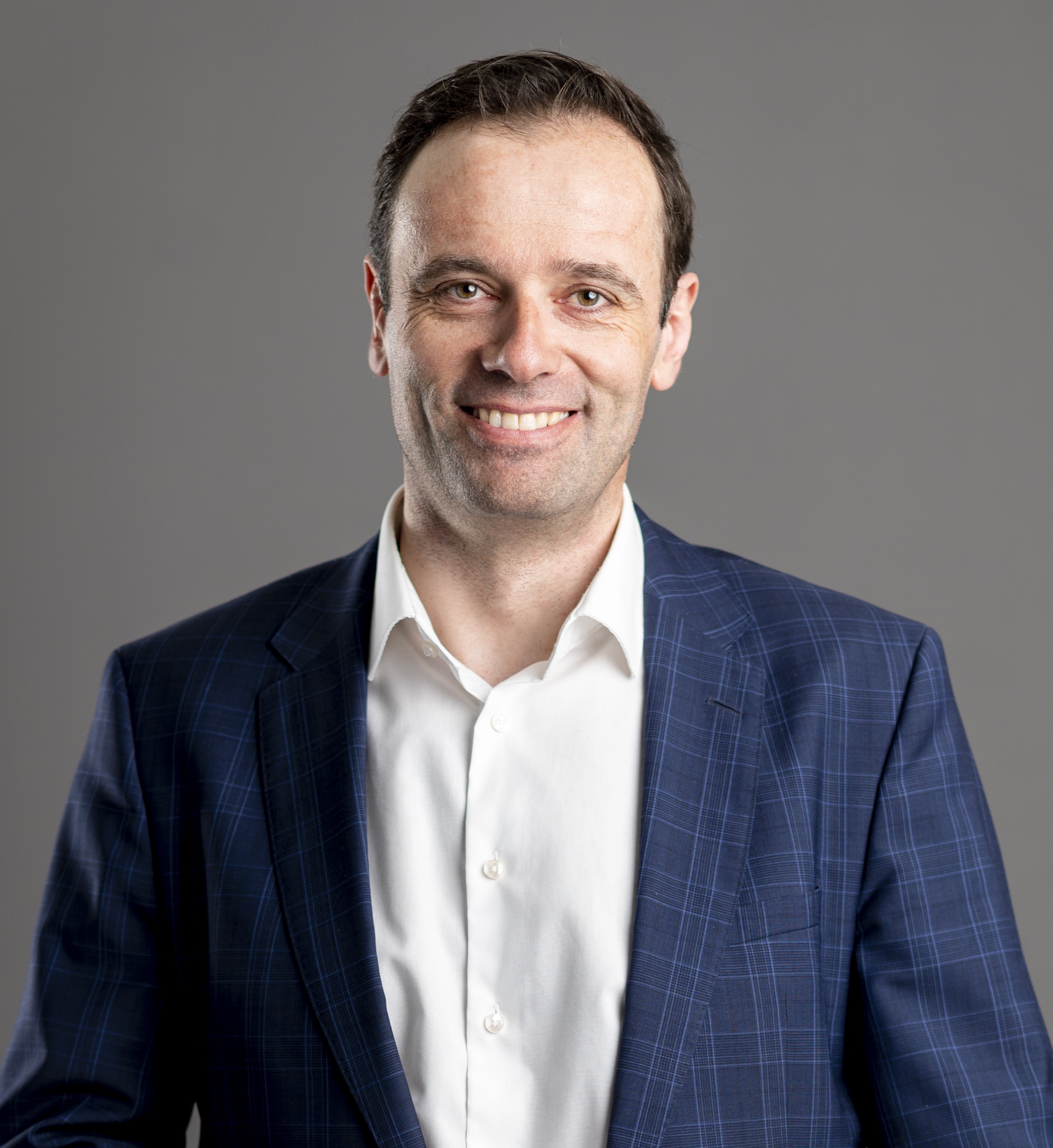
Roman Oberauer has joined the management team at CANCOM Austria AG and is responsible for the Managed Services division in Austria

On 1 June 2026, Roman Oberauer took over as Managing Director of CANCOM Converged Services GmbH, heading up the Managed Services division within the CANCOM Austria Group. In this role, Roman …

2 min reading time
Read the full article

26. May 2026

Closer to the customer than ever before

The past few years have been characterised by far-reaching changes for CANCOM Austria. The incorporation of the former Kapsch BusinessCom AG into the German CANCOM Group in 2023 also set a new cultural and strategic course in the Austrian market. Today, the company is well on its way to becoming a modern, customer-centric system integrator for the Austrian market. "Overall, the company is developing very positively," says Dietmar Wiesinger. "We now have access to a broader portfolio than ever before and can therefore bring real IT innovations to our customers." In addition to Austria, the CANCOM Austria Group also includes activities in Switzerland, Romania and a development hub in the Czech Republic. At the same time, Wiesinger emphasises that despite the integration into the international group, the company has retained its entrepreneurial independence. "As an integral part of the CANCOM Group, we now have a great deal of freedom to develop our business independently and in a targeted manner." Bernd Eder also believes the company is on the right track. The culture is changing and it is succeeding very well in inspiring young employees to work together on the important topics for the IT of tomorrow. "We have matured significantly in terms of both organisation and management," he explains. "With the current setup and the strong embedding in the Group, we can now operate very clearly and decisively in the Austrian market." Eder points in particular to the company's market position: "We are the largest system integrator in Austria and have the largest installed technological base in the market and have an exciting transformation journey ahead of us with our customers." Cultural change as a decisive factor The new management sees the greatest impact of the transformation less in the market presence and more within the organisation itself. For Eder, the decisive difference lies in the type of collaboration and leadership. "The key developments are primarily evident at a cultural and organisational level," he emphasises. The transition from an owner-managed company to a management-orientated structure has permanently changed the way we work together. "Today, we act as managers within the organisation. Rigid, old structures are being broken down and everyone has the opportunity to make an active contribution." The focus is on performance, collaboration and joint success for the customer. At the same time, management is now much closer to the teams than in the past. "Collaboration is more intensive, more direct and more focused on dialogue," says Eder. It is precisely this greater proximity and interest in genuine innovation that are key elements of cultural development. Wiesinger also sees operational advantages in joining the CANCOM Group. The aim of the transformation was to offer customers a broader and more powerful portfolio - a claim that is now being visibly realised. For example, CANCOM Austria now benefits from digital sales channels such as a Group-wide web shop and an integrated marketplace for licence topics. International strength, local proximity Despite its stronger international focus, CANCOM Austria continues to see itself as a regionally anchored IT partner. It is precisely this combination of international scaling and local proximity that the two board members see as a strategic advantage. "The broad and well-established partner landscape is a key advantage for our customers," explains Wiesinger. It makes it possible to develop solutions that are open to all technologies and to tailor them precisely to individual requirements. At the same time, the importance of managed services and operational responsibility is constantly growing. "Especially in sensitive areas and with critical infrastructure, customers benefit from our many years of experience and high level of trust," emphasises Wiesinger. For Eder, the stronger international network opens up additional opportunities while maintaining clear regional roots. "We now operate more in an international context and utilise this perspective in a targeted manner without losing our proximity to the customer," he says. Digital sovereignty as a management issue Digital sovereignty is currently a key topic in many discussions with customers. Both board members warn against reducing the term to pure infrastructure issues. "Digital sovereignty should not be confused with self-sufficiency," says Wiesinger. Complete independence is neither realistic nor sensible in a globally networked economy. Rather, it is about consciously dealing with dependencies and understanding which data and systems are critical for your own business. Companies are increasingly concerned with issues relating to data security, geopolitical risks and regulatory requirements. "Today, digital sovereignty is an integral part of many discussions at management level," explains Wiesinger. Eder no longer sees it as a purely technical discussion either. "Digital sovereignty ultimately describes the ability to make technological and economic decisions independently." As a result, system integrators are increasingly becoming strategic sparring partners for their customers. This in turn requires new approaches, innovative employees and trust in the collaboration. Accordingly, both are critical of a simplified debate about cloud versus on-premise. "Digital sovereignty cannot be reduced to the question of cloud or on-premise," explains Wiesinger. Rather, the decisive factor is which solution makes sense for which use case. Local expertise remains crucial Despite international Group structures, both Management Board members continue to see local implementation expertise as a key success factor. "The key added value of our business lies in the skills of our employees," says Wiesinger. Customers consciously choose CANCOM because of this expertise and the trust they have built up over the years. Regional roots play a key role, particularly in the security environment. "Our customers rightly expect projects to be implemented with local resources and not from anonymous nearshore structures," explains Wiesinger. Eder sees an example of the combination of international technology and local solution development in the collaboration with Cisco. "Cisco acts more as an enabler and deliberately leaves the concrete design to the local system integrator," he explains. This creates greater room for manoeuvre in order to adapt solutions precisely to the requirements of the respective market. The result is added value for the customer thanks to a great strategic fit and future viability. The days of selling purely on price and availability are over. AI is changing the importance of infrastructure The topic of artificial intelligence is currently developing particularly dynamically. For Wiesinger, it is clear that AI is fundamentally changing the role of IT infrastructure. "With the emergence of artificial intelligence, digital infrastructure is once again becoming much more of a focal point," he says. What was long regarded as a commodity is now regaining strategic importance. The effects are already visible worldwide. "The demand for high-performance hardware has risen sharply," explains Wiesinger. There are significant bottlenecks in availability, delivery times and prices, especially for memory and chip capacities. In this area, too, it is therefore necessary to do your strategic homework and work out how AI can be used to achieve competitive advantages. "The current development around artificial intelligence opens up enormous opportunities, and those who do not take advantage of them risk competitive disadvantages in the long term," emphasises Wiesinger. Although Europe will probably not play a dominant role in the development of large basic models, it has considerable strengths in specialised AI applications and industry-specific solutions. From co-pilot to process automation While many companies have gained initial experience with AI-supported workplace tools, Wiesinger sees the actual added value primarily in the integration of AI into operational processes. "The greatest leverage is created where artificial intelligence is directly integrated into central company processes," he explains. If, for example, quotation preparation or customer interactions can be made significantly more efficient, there are direct economic benefits. Eder also recognises clear patterns in the practical use of AI. "The widespread use of language models is now being followed by a phase in which standardised, transaction-based processes in particular are being automated," he explains. This creates efficiency potential in all areas of the company. At the same time, people remain indispensable in many areas. "Where experience, contextual understanding and personal interaction play a major role, people remain a decisive factor. People play the biggest role in our business model with their experience, their understanding of the context and a customer-focussed mindset. And that will remain the case." Focus on security, AI & managed services The new management sees no need for radical changes of course in the coming months. Instead, the focus will be on consistently expanding the existing position. First and foremost, Dietmar Wiesinger mentions security, where CANCOM Austria already has a strong market position. The focus is also on artificial intelligence along the entire value chain - from consulting and implementation to operation and infrastructure. Managed services also remain particularly important. Many companies are finding it increasingly difficult to secure expertise and resources in the long term or to fulfil regulatory requirements efficiently. "This is where we offer scalable services that provide targeted relief," explains Wiesinger. For Eder, it will be crucial to implement clear priorities and genuine innovation despite the highly dynamic market." Especially in turbulent times, the temptation to remain in old structures and power structures is great. This is precisely why customer proximity, a genuine willingness to change and a focus on the company's strengths are needed now. "We see it as our task to actively approach customers and jointly develop solutions that offer orientation and stability." With this mixture of technological breadth, regional proximity and innovation, CANCOM Austria wants to shape the next phase of growth. The message from the new Management Board duo is clear: the company is well on its way to becoming a modern system integrator for the Austrian IT market and is closer to its customers than ever before.

Read the full article

5. May 2026

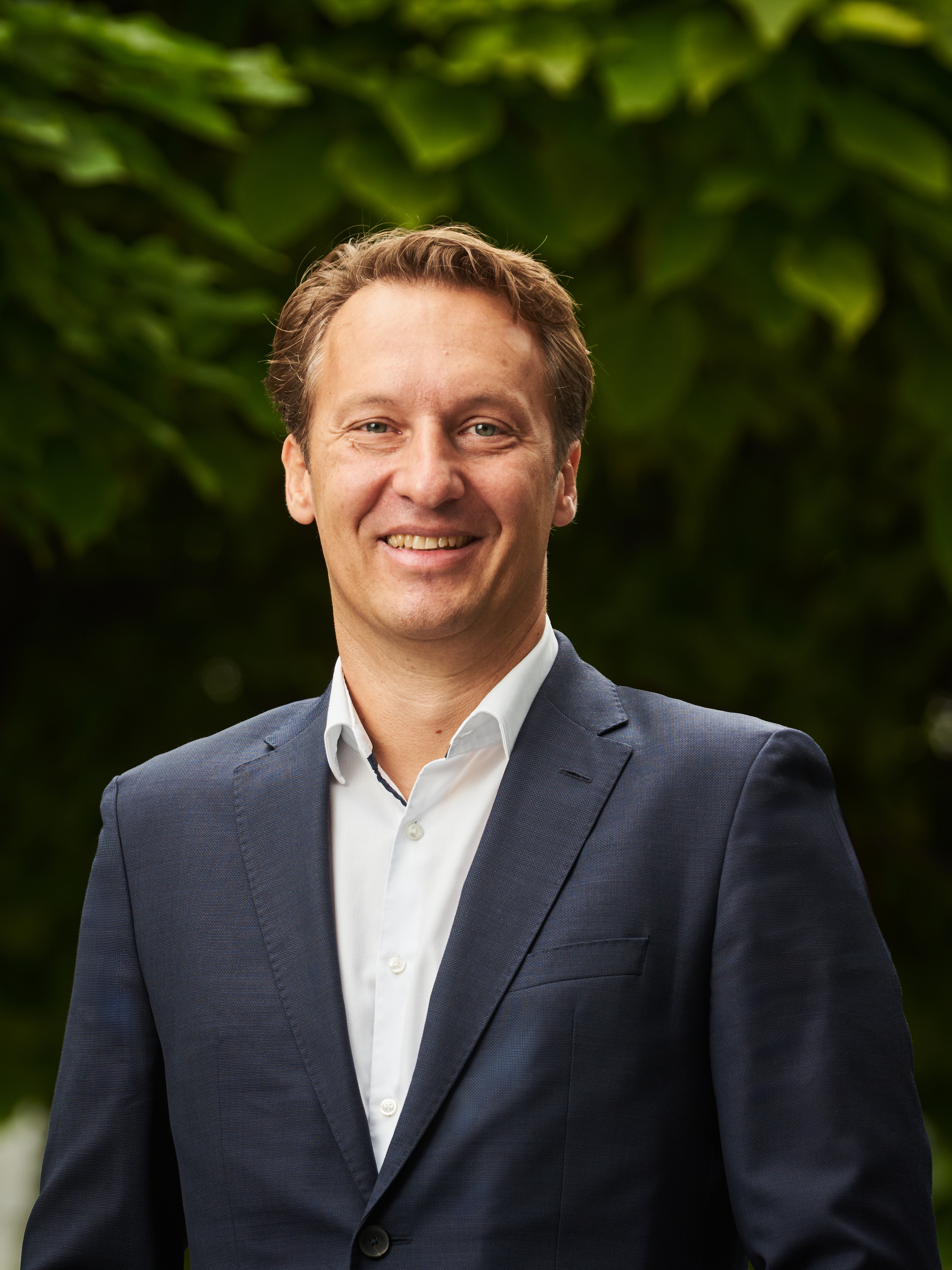
Florian Thaler is the new branch manager at CANCOM Austria AG in Tyrol

CANCOM Austria (formerly Kapsch BusinessCom) has had a branch in Tyrol for over 70 years and, as an ICT solution and service provider, supports companies and institutions in the region in all areas relating to infrastructure, networks, IT security, the modern workplace, artificial intelligence and digitalisation. Florian Thaler was most recently Talent Hub Manager at NTT DATA Austria in Innsbruck, where he further developed the regional IT business. Prior to that, he worked as a manager at BILLA AG (REWE Group) in western Austria and was responsible for strategic HR issues. Other positions included the management of AG Engalm and a management role at Krismer Gastronomie. Thaler studied International Business Administration at MCI Innsbruck and completed further training in corporate development as well as coaching and training. Born in Schwaz, he lives in Vomp and has more than 15 years of experience in working with teams and organisations, from setting up new units to supporting change processes. "I'm looking forward to my new role in Innsbruck. Together with the team and our customers, I would like to contribute to the further development of Tyrol in all areas relating to digitalisation and secure infrastructure and promote the use of AI, cloud and modern workplaces regionally ," says Florian Thaler. With 42 employees, the Innsbruck team supports numerous long-standing customers, including Tirol Kliniken, Tyrol Air, the state of Tyrol and the University of Innsbruck as well as the Swarovski Group, Gebro Pharma, Tyrolit, Egger Holzwerke and renowned businesses such as the Hotel Alte Post in Lech and the Hotel Trofana Royal. Kapsch supplied two-way radios to the Innsbruck mountain rescue service back in the 1950s. "Florian Thaler knows the Tyrolean IT market and companies very well and brings with him many years of management expertise. He will consistently develop the Innsbruck location, develop projects with our existing and new customers and also drive our growth course in the western region," says Reinhold Wurzinger, Vice President Sales at CANCOM Austria. About CANCOM Austria: As a leading digital business provider and AI enabler, CANCOM accompanies companies, organisations and the public sector into the digital future. The range of services and solutions includes classic system house IT solutions as well as data-based digital solutions, managed services and cloud services. We accompany the digital evolution of our customers with passion and technology and support them in reducing the complexity of their IT and developing new business models. We offer a holistic portfolio for all IT and business requirements.

Read the full article

16. April 2026

CANCOM Austria opens new location at Campus V in Dornbirn!
Celebratory review with business, politics and partners

Dornbirn, April 2026 - CANCOM Austria AG officially opened its new site at Campus V in Dornbirn on 9 April. Numerous guests from business, politics and education accepted the invitation and celebrated this important milestone for the Vorarlberg location together. The official opening was performed by Dietmar Wiesinger, CEO of CANCOM Austria AG, together with high-ranking representatives from the region: Marco Tittler, State Councillor of Vorarlberg, who emphasised the strategic importance of artificial intelligence for the business location in his speech, Alexander Juen, Deputy Mayor of the City of Dornbirn, Stefan Fitz-Rankl, Managing Director of Vorarlberg University of Applied Sciences, who emphasised the close partnership with CANCOM, particularly in the areas of business informatics and software development, and Bernhard Ölz, CEO of PRISMA Holding AG, which is significantly involved in the development of Campus V as co-owner of the site. The 50 guests also included numerous representatives of regional companies and partner organisations, who used the evening for intensive exchange and networking. The new location in Campus V, Vorarlberg's first campus for business, knowledge and creativity, emphasises the strategic importance of the region for CANCOM Austria. "Vorarlberg is a key innovation and growth market for us. With the new location, we are creating the basis for supporting our customers even more intensively in the digital transformation and are thus sending a strong signal for the further development of the digital infrastructure in Vorarlberg," emphasises Dietmar Wiesinger. As a leading ICT solution and service partner and AI enabler, CANCOM accompanies companies, organisations and the public sector holistically into the digital future. The portfolio ranges from classic IT and telecommunications system house services to cloud and managed services to data-driven solutions, applications and AI. The aim is to reduce IT complexity, enable innovation and open up new business models along the entire IT lifecycle from consulting and implementation through to operation and support. And all this with a strong regional focus through the Austria-wide offices. CANCOM relies on strong regional partnerships: In Vorarlberg, the company supports numerous institutions in the healthcare sector such as Vorarlberg hospitals, as well as leading industrial and logistics companies such as ALPLA Werke, Gebrüder Weiss GmbH, the Getzner Group, Hirschmann Automotive GmbH, Loacker Recycling GmbH, Haberkorn GmbH, Collini GmbH, Hermann Pfanner Getränke GmbH, as well as Zumtobel Group AG and the i+R Group. They rely on CANCOM's comprehensive IT and security expertise, including services from the CANCOM Cyber Defence Center. The customer base also includes illwerke vkw AG, a leading network operator in the provider sector. In addition, the site supports numerous companies across national borders in the four-country corner and the entire Lake Constance region. "With our new location in Campus V, we are not only creating modern workspaces for our competent team of experts, but also a place for collaboration, innovation and dialogue with customers and partners - exactly where the future is being created," adds Kuno Schoder, CANCOM branch manager in Vorarlberg.

Read the full article

10. March 2026

CANCOM Cloud Marketplace integrates ISV solutions from the AWS Marketplace

The AWS Marketplace offers companies access to thousands of software solutions. These range from selection and purchase to implementation and management - including pre-built AI agents and ready-to-integrate tools - and are available via a centralised platform. The integration gives CANCOM customers direct access to numerous solutions via their familiar CANCOM Cloud Marketplace login, which they can procure and manage centrally. The connection offers standardised billing, centralised contract and subscription management and real-time transparency regarding costs and usage. The offering is aimed in particular at medium-sized and large companies that want to simplify, accelerate and scale their cloud procurement. "By integrating the AWS Marketplace into our platform, we are making it even easier for our customers to find, procure and manage software solutions - all in a unified user experience. At the same time, they gain access to a broad portfolio of proven ISV solutions on AWS and benefit from consolidated billing for all IT investments," says Peter Weisbach, Senior Vice President Unified Commerce at CANCOM. "This is exactly what the CANCOM Cloud Marketplace enables: one login, one marketplace, with direct access to the broad AWS Marketplace ISV portfolio." The CANCOM Cloud Marketplace for modern cloud sourcing The CANCOM Cloud Marketplace is the central platform for modern cloud sourcing. Companies can flexibly organise their cloud landscape according to their individual requirements. Cloud services from various providers can be procured, managed and billed centrally via an intuitive user interface. With the integration of the AWS Marketplace, CANCOM is emphasising its claim to rethink B2B procurement: as a seamless combination of technology, automation and consulting.

Read the full article

5. December 2025

Technology as a driver of the business model

CANCOM has had a strategic partnership with AI solution specialist ServiceNow for several years. What is the common goal? Jochen Borenich. The aim of this collaboration is to provide state-of-the-art digital solutions and AI-supported value-added services for SMEs in Germany, Austria and Switzerland in order to drive forward the digital transformation - towards greater productivity, efficiency and cost optimisation. The aim is for SMEs to become more competitive by integrating AI-driven data and processes into digital workflows. What does ServiceNow stand for and how does it differ from a traditional enterprise resource planning system? Vesna Glatz. Our AI platform connects people, processes, data and devices to increase productivity and maximise results. ServiceNow gives companies a centralised operating system for work. Instead of managing many separate processes and systems, processes, data and services converge on a unified platform. ERP is a reflection of the past: stable core transactions, clearly defined processes, little change. ServiceNow shapes the future: dynamic processes, quick decisions, end-to-end controllability across all areas. ERP keeps the company stable. ServiceNow makes it agile, adaptable and future-proof. "One platform for everything"? Glatz. Yes, one platform instead of many individual solutions creates clarity: one data model, one process logic, one security framework. This makes change easier, speed higher and controllability better. In an environment that is constantly changing, this controllability becomes a decisive success factor. Companies increasingly find themselves in complex, dynamic contexts, but at the same time often have rigid structures. ServiceNow is the technological platform that breaks down silos and creates flexibility. One Platform is the architecture that will support a company for years to come - regardless of growth or complexity. And the combination of ServiceNow plus CANCOM works because ... Borenich. Because it combines platform expertise with implementation experience and an end-to-end approach to both technical and organisational anchoring. We also benefit from the fact that we ourselves have been using ServiceNow at CANCOM since 2019. ServiceNow was "born in the cloud", i.e. developed to be cloud-native from the outset. Why is that? Glatz. This makes the platform light, stable and consistent. We operate it globally ourselves, but we can also provide it on hyperscalers, in local data centres or on sovereign solutions such as Stackit. The architecture always remains the same. Only the operating model is based on the requirements of the core business. This stands for the aforementioned flexibility. Artificial intelligence is at the centre of the digital transformation. Expectations seem to be just as high as the reluctance of many companies to strategically integrate AI. Borenich. After the hype, which is accompanied by exaggerated expectations, there is usually a period of disillusionment. For many, there is a lack of clarity about what AI can already achieve in a company and where development time is still needed. That's why advice is important. We see clarification as part of our service. And we focus on the implementation of functioning use cases that actually provide concrete benefits. This becomes clear with the Service-Now platform. This is how companies can be convinced. However, setting up AI applications requires the availability of data. Borenich. The availability of data and the generation of platforms are a basic prerequisite for the application of AI. The publicly available information on the internet is already integrated into the large models, but the greatest treasure trove of data that needs to be unearthed lies within the companies themselves. For example, in knowledge databases and collected by machines. Basically, it is about the beneficial digitalisation of business models and processes and, in this context, the transformation of IT from a cost centre to a solution centre. The focus is therefore on solving problems with the help of digital tools, in which AI applications are playing an increasingly important role. When it comes to AI, thought leaders are talking about an industrial revolution that is fundamentally changing the world of work and therefore production conditions. Do you agree with this? Glatz. Absolutely. Most people are still using AI like a tool. In the future, however, AI will become the control centre of companies. Today it takes over work; tomorrow it will control entire processes independently. It's not just about taking repetitive tasks off people's hands. It is about cognitive expansion and fusion. AI will become part of our judgement and decision-making ability. However, AI agents do not change who makes decisions, but rather how work is created. By summarising information and preparing options. Agents create speed and stability in the background. They therefore ensure fast operation, robustness and resilience. However, the key decisions remain with humans, who determine direction, quality and judgement. AI and humans as co-operation partners? Borenich. Ideally, it's about the optimal interplay of different competences - and using them in the right place. A concrete example. We have established that we have a so-called deflection rate of 80 per cent. In other words, 80 per cent of customer queries at the service desk can be resolved without human intervention thanks to AI. This saves human labour, which can be used in other, more meaningful areas. In other activities, AI applications become effective as support for intellectual, creative work. Another advantage of AI: as soon as a skill has been recognised and learned, it is available worldwide. Knowledge transfer can therefore take place within a fraction of a second. And AI is increasingly moving in the direction of physicality, with robotics and human-machine collaboration. These are also topics that will significantly change many work processes and make them more productive. If the advantages of AI-based digital transformations are so obvious, it is all the more sobering that Austria is falling behind internationally in this key technology. According to the McKinsey study "State of AI in Austria 2025", the AI maturity of Austrian companies is below the EU average. One conclusion of the study: in many companies, little to no increase in productivity has been achieved with artificial intelligence applications. Why is that? Glatz. Sometimes there is still a lack of judgement at board level and the right decision-making architecture in companies. In my opinion, an important step in the right direction would be to establish transparency as a corporate value. Then the decision-making logic will also change. Borenich. In difficult economic situations, many companies traditionally tend to economise. Promising projects are cancelled. The approach is simply too defensive. It's a mentality problem. If you fall back on old solutions to new problems, if you prefer to hesitate and see how others do it first - then you can't expect to be at the forefront. I think company managers need to realise that technology is the driving force behind the business model. The opportunities that this opens up should not be missed if you want to remain competitive. So productivity increases are indeed possible if you pull the right levers? Glatz. The productivity gains are realistic - if workflows are clearly defined, responsibilities are unambiguous and processes are linked end-to-end. Many companies today are losing speed because they rely on too many individual solutions that don't work together. The longer you wait, the greater the gap in international competition. The productivity lever does not come from more tools, but from a platform that eliminates friction, accelerates decisions and enables scaling. ABOUT SERVICENOW: ServiceNow has set itself the goal of making artificial intelligence usable for everyone. The ServiceNow AI platform for business transformation connects people, processes, data and devices to increase productivity and maximise business outcomes. ABOUT CANCOM: As a digital business provider, CANCOM supports companies, organisations and the public sector in the implementation of their digitalisation strategies. The CANCOM Group's offering includes solutions in the areas of Artificial Intelligence, Security & Network, Datacenter & Cloud, IoT Solutions and Modern Workplace and includes services for the entire IT lifecycle - from the provision of IT infrastructures, planning and integration, to support, managed services and XaaS.

Read the full article

17. October 2025

Municipalities and provinces rely on personalised and modern citizen service with secure communication solutions from CANCOM Austria

Vienna, October 2025 - CANCOM Austria has once again won a tender in the public sector. In addition to the possibility for federal offices throughout Austria to commission a central cloud telecommunications infrastructure or Unified Communications & Collaboration (UCC) via CANCOM Austria, which has existed since 2012, the digitization company has now also secured the framework agreement for an on-premise telecommunications infrastructure or UCC for federal states and municipalities. To date, the roll-out, operation and support of telecommunications systems for federal ministries and their downstream departments throughout Austria have been provided via several successive framework agreements. The solution is based on a private cloud infrastructure that is operated redundantly in two data centers and also has dedicated clusters for particularly sensitive institutions such as Parliament, the Public Employment Service, the Austrian President's Office and the Financial Market Authority. The solution is used to operate a total of around 60,000 workstations and 6,500 call center workstations, including around 5,500 in the Federal Ministry of Finance alone. More than 150 services - including "FinanzOnline" - are provided in this way. With this dimension, the installation is one of the largest central communication infrastructures in Europe. With the new framework agreement, CANCOM Austria is now extending its service portfolio to all provincial and municipal offices in Austria, in addition to the federal offices it has been supporting for many years. This includes the roll-out and maintenance of Voice-over-IP telephone systems and UCC applications such as e-mail, agent chat or chatbot integration for environments with up to 1,500 workstations. These include, for example, the City of Vienna with its district offices, municipalities, associations and fire departments. "These two framework agreements confirm the great trust that public clients place in our expertise. We are delighted to be able to make a decisive contribution to Austria's secure and modern communications infrastructure," says Michael Gindl, Project Manager at CANCOM Austria. About CANCOM Austria: As a leading digital business provider, CANCOM accompanies companies, organizations and the public sector into the digital future. The range of services and solutions includes classic system house IT solutions as well as data-based digital solutions, managed services and cloud services. We accompany the digital evolution of our customers with passion and technology and support them in reducing the complexity of their IT and developing new business models. We offer a holistic portfolio for all IT and business requirements. The CANCOM Group's offering includes innovative solutions in the areas of Artificial Intelligence, Security & Network, Datacenter & Cloud, IoT Solutions and Modern Workplace and includes services for the entire IT lifecycle - from the provision of IT infrastructures, planning and integration, to support, managed services and XaaS. Customers benefit from the extensive expertise with which their diverse requirements are translated into concrete industry-specific IT solutions to significantly promote their business success. The more than 5,600 employees of the internationally active CANCOM Group with around 80 locations in the DACH region, Belgium, Slovakia, Romania and the Czech Republic as well as an efficient partner network guarantee market presence and customer proximity. The CANCOM Group is managed by Rüdiger Rath (CEO) and Thomas Stark (CFO). The company is headquartered in Munich. CANCOM generated annual sales of around 1.7 billion euros in 2024. The Group parent company CANCOM SE is listed on the Frankfurt Stock Exchange in the TecDAX and SDAX (ISIN DE0005419105).

Read the full article

24. September 2025

Holistic management task

The world of work is at a turning point: artificial intelligence (AI) is developing at a rapid pace and transforming not only processes but also entire organizational structures. Companies, public administration and institutions are currently experiencing a fundamental change that is no longer just about digitalization - it is about the productive interaction between man and machine, experience and algorithms, intuition and data intelligence. The key driver of this transformation is the increasing use of AI systems, which are effective to varying degrees depending on the complexity of the task and existing experience in the company. In areas with a high degree of standardization, AI agents are already performing repetitive tasks completely autonomously. In more complex, knowledge-intensive fields, however, hybrid working models are emerging: Humans work hand in hand with so-called "AI twins" - digital twins that mimic human behavior, provide suggestions, prepare decisions and ultimately relieve the workload or improve content and operations. Skills shortage as a catalyst The shortage of skilled workers is acting as a catalyst: companies are being forced to redistribute tasks and rethink skills with the help of technology. The "digital workforce" is growing - not through new hires, but through the targeted use of intelligent agents and helpers. The question is therefore no longer whether AI will be integrated into work, but how collaboration between human employees and digital actors can be organized efficiently and ethically. This also gives rise to a new understanding of operational management. The traditional manager as a decision-maker and supervisory authority is being supplemented by new roles - such as the "AI orchestrator". This role operates at the interface between technology, organization and people. These AI orchestrators need to understand which AI systems can be used for what, how human and machine skills complement each other and how new processes can be established. They not only manage teams, but also digital systems - and ensure transparent, trusting collaboration between humans and machines. Enormous potential This makes operational management more complex, but also more strategic. It must understand technological progress, accompany cultural change and create learning spaces. It needs a clear vision and new management principles that promote self-organization, responsibility and continuous development. At the same time, the organization must be prepared to question hierarchies, break down silos and promote interdisciplinary collaboration. It has been proven that companies that are among the digital champions have significantly stronger sales growth than those companies that have focused less on digitalization. The age of AI requires not only technological innovation, but above all organizational intelligence and courageous and transparent leadership. Companies that manage to actively shape this change can unleash enormous potential: for efficiency, for innovative strength and new operational value creation - and for a new quality of work. Jochen Borenich, CEO CANCOM Austria

Read the full article

24. September 2025

More efficiency and customer satisfaction through assistance solutions

Artificial intelligence has long since made the transition from research to everyday life. It can already be found in a wide range of value-added areas, especially in business applications - across all industries. AI-supported assistants, also known colloquially as bots, have become particularly well established. Whether for researching internal company knowledge or highly specialized in an area of activity such as customer service. These digital helpers "understand" natural language, answer more complex questions and suggest solutions - all in a matter of seconds. AI-supported chatbot for recurring routine enquiries "Many companies are currently focusing on making processes more efficient and reducing the workload of employees in the long term - whether by automating simple routines or by providing assistance with complex decisions," explains Manuel Moser, Director Digital Innovations & AI at CANCOM Austria. The spectrum of applications now ranges from simple knowledge bots to assistants that independently use company applications via so-called tools. Together with CANCOM, a large educational institution has added a digital colleague to its support center: an AI-supported chatbot that automates recurring inquiries about the educational offer and answers them around the clock. A previously high number of support requests on often the same topics, which were requested via several communication channels, could thus be resolved. These recurring routine inquiries put a strain on the support team, particularly at busy times. Protection mechanisms against misuse of the bot The first step was to implement the intelligent chatbot in the university's internal Study Support Center, which was then extended to the public website. Using a specially developed service, students and interested parties can submit their inquiries around the clock via self-service. Deep integration into the organization ensures that the data is up to date. The bot accesses heterogeneous knowledge about the range of courses on offer and thus provides targeted answers to enquiries. Inquiries outside the defined area are not answered. Protection mechanisms against misuse of the bot are also included. Significant reduction in the volume of inquiries in the support center "Our CANCOM Assistant has significantly reduced the volume of inquiries in the support center - with corresponding relief for employees at peak times. In addition, improved availability is ensured, as the information can be accessed around the clock," explains Manuel Moser from CANCOM Austria. The basis for the AI solution of the university educational institution is the CANCOM Assistant Suite, which supports companies across all industries in the use of state-of-the-art LLM (Large Language Models) technology. The suite ranges from low-threshold access to knowledge to autonomous AI agents that take on entire tasks independently. Easily configurable AI agents for different business areas and processes "The CANCOM Assistant Suite integrates seamlessly into the company's existing systems and enables the use of AI in different business areas and processes through easily configurable agents," explains Manuel Moser, Director Digital Innovations & AI, CANCOM Austria. CANCOM Austria has also created benefits through AI for a large service company: This is faced with the challenge of answering a high number of email inquiries correctly in terms of content and also legally, without having to spend too much time researching internal systems. Tailor-made integration into existing work processes The AI-based CANCOM Assistant was perfectly integrated into the existing work processes - with links to internal documents, databases and other data sources. The "human in the loop" is important here: even if the AI provides suggestions, the human is still in the driver's seat and validates the answer before it is sent to the customer. "The significant reduction in research effort and the much faster response to recurring inquiries gives customer service staff the opportunity to focus on complex and sensitive cases," explains Manuel Moser, Director Digital Innovations & AI at CANCOM Austria.

Read the full article

19. September 2025

CANCOM Austria brings self-measurement kiosk for vital functions "Alviscan" to Austria

Alviscan offers extensive functionalities that make the measurement process convenient and safe: During the measurement, users receive immediate feedback via the screen, short instructional videos show how to perform the measurements correctly, and the user interface is available in multiple languages to make it easier for patients from different backgrounds to use. In addition, Alviscan can be connected to any hospital information system (HIS) or electronic patient record so that the measurement results are transmitted automatically and error-free. This prevents input errors and data loss. At the same time, Alviscan strengthens patient engagement, as patients measure their vital signs independently and are more aware and actively involved in their care processes. Katharina Proske, Sales Director Digital Health at CANCOM Austria, explains: "Alviscan offers patients more personal responsibility and transparency about their vital signs, while hospitals benefit from more efficient processes, reduced sources of error and a noticeable reduction in the workload of nursing staff." CANCOM Austria is thus once again focusing on innovative technologies that increase efficiency in the healthcare sector and improve patient safety. About Alphatron Medical Alphatron Medical is a leading provider of integrated medical technology solutions based in Rotterdam, the Netherlands. The company develops and markets innovative products that make the daily work of healthcare professionals more efficient and safer. Its core solutions include mobile workstations such as the AMiS-PRO, the Alviscan self-measurement kiosk for vital signs and systems for image and data management. Alphatron Medical takes a holistic approach, intelligently combining hardware, software and technology to optimize the entire care process. With over 25 years of experience, Alphatron Medical works closely with hospitals and care facilities to develop customized solutions that meet the specific needs of the healthcare industry. The company is a member of the Erasmus MC Business Club and is actively involved in supporting scientific research. Further information can be found at alphatronmedical.com .

Read the full article

Download the CANCOM logo

Press photos for download

How may I help you?
CANCOM Austria AG processes your personal data exclusively in the context of your inquiry. Processing is carried out in accordance with Art. 6(1)(b) GDPR for the performance of a contract or a request. For storage and hosting, we use IT service providers who may access your data in the process. Providing your data is voluntary; however, without it, your inquiry cannot be processed. For questions, you can reach us at info@cancom.com.

Under this link you will find our privacy policy with further information.